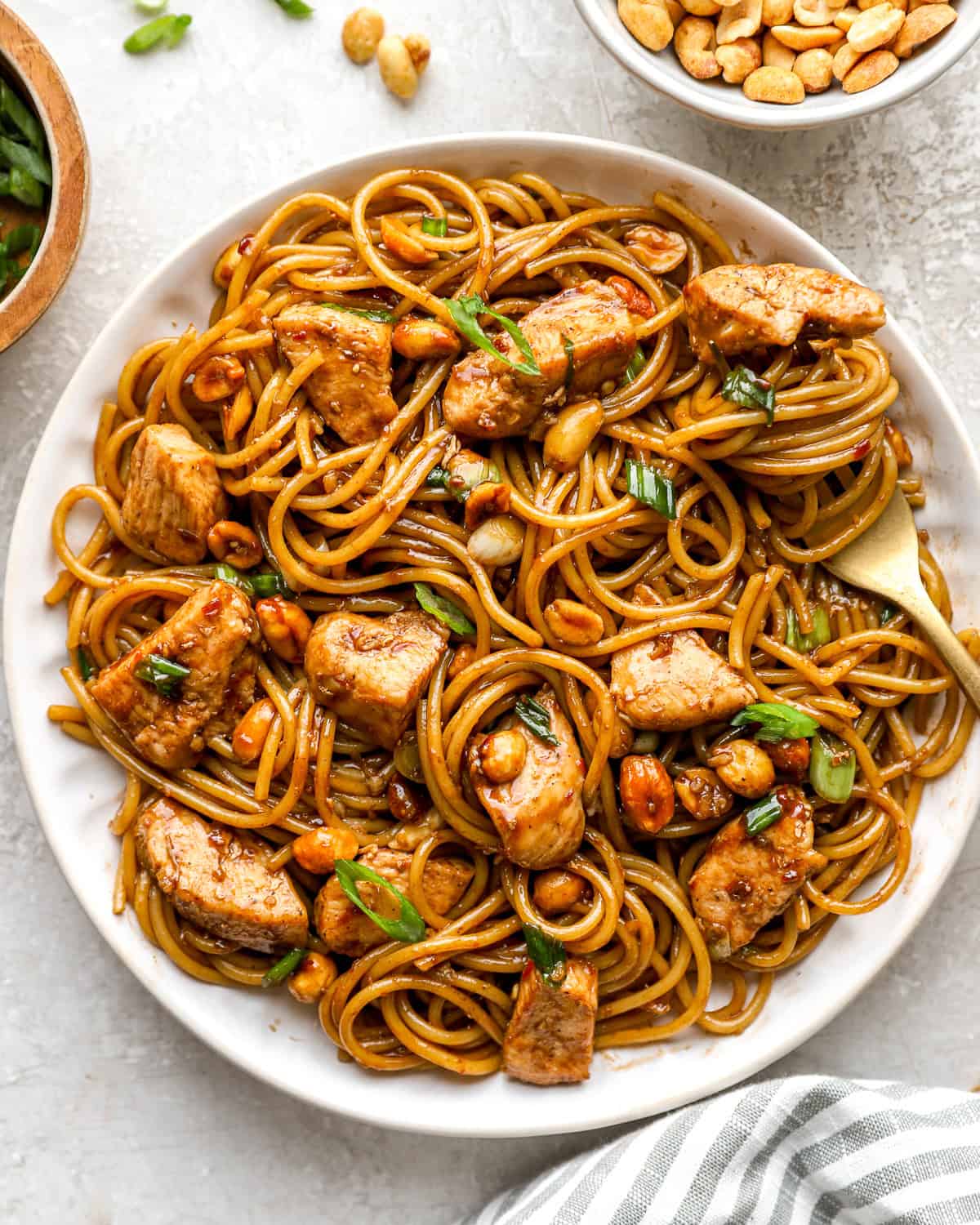
This kung pao spaghetti might be even better than the CPK original. I don’t take that claim lightly. Tender spaghetti and juicy stir-fried chicken get tangled up in a glossy, sweet-spicy soy-chili sauce. Every strand gets coated, then showered with crunchy roasted peanuts and green onion right before it hits the table. It’s saucy, a little messy, and impossible to eat quietly (in the best way). The best part? It comes together in about 35 minutes flat, with stuff your regular grocery store already stocks. That makes this my go-to move whenever I’m craving takeout but don’t feel like waiting on delivery.
The Secret to That Glossy, Clingy Sauce
The first time I made this at home, I used perfectly al dente spaghetti. Tossed with the sauce, it turned into a soft, gluey mess. It tasted nothing like the version I remembered from CPK. Turns out the fix was ridiculously simple: pull the pasta about a minute before it’s done. It keeps cooking once it hits the hot sauce. Starting it slightly underdone gives you that pleasantly chewy bite instead of mush. I’ve made this more times than I can count since then. Regular spaghetti holds up to the thick sauce so much better than thin spaghetti. Thin spaghetti tends to disappear into the sauce instead of standing up to it. It’s the same reason I reach for regular noodles in my Beef Lo Mein, too.
The sauce is really the star of the show here. Soy sauce and chicken broth build the savory base. Brown sugar takes the edge off the chili garlic sauce’s heat. A touch of cornstarch turns everything glossy and clingy instead of thin and watery. Leave it out, and the sauce pools at the bottom of the bowl instead of coating the noodles. It’s a small ingredient, but it makes a huge difference. This isn’t a delicate, subtle dish, and it isn’t trying to be. It’s bold and a little messy. It’s exactly what you want when you’re craving something with real flavor on a busy night.
How Spicy Is This, Really?
This recipe uses 1 tbsp of chili garlic sauce, which gives you a gentle, background warmth rather than a punch of heat — great if you’re cooking for kids or spice-shy eaters. If you want it to actually taste like kung pao, though, I’d bump it up to 2 tablespoons. That’s the sweet spot where the heat is noticeable without needing a glass of milk nearby. Taste your sauce before it hits the pan and adjust from there; chili garlic sauces vary quite a bit in heat level from brand to brand, so a quick taste test saves you from guessing.
Tips for Beginners
- Undercook your pasta on purpose. Start checking your spaghetti about a minute before the package says it’s done, and pull it while it still has a firm, almost-too-firm bite. The noodles keep absorbing liquid and softening once they hit the hot sauce in step 5, so if they’re already fully cooked when they go in, they’ll turn soft and gluey by the time you’re plating. This is the single most common way this dish goes wrong, so don’t skip it.
- Don’t skip the cornstarch. It’s just one tablespoon, but it’s doing all the heavy lifting for that thick, glossy, clingy sauce texture you want. Make sure you whisk it into the cold liquid ingredients thoroughly before it ever hits the heat, since cornstarch clumps if it’s added to a hot pan or whisked in halfheartedly. If you see white streaks in your sauce mixture, keep whisking until it’s completely smooth.
- Let the sauce sizzle and thicken before adding the pasta. Once the sauce hits the hot skillet, give it a full one to two minutes, undisturbed except for an occasional stir, until it’s visibly bubbling around the edges and starting to look glossy rather than watery. This is the point where the cornstarch actually activates and does its thickening work. Add the pasta too early, while the sauce is still thin, and you’ll end up with a soupy dish instead of a saucy one.
- Give your chicken room to brown. Chicken pieces that are crowded in the pan release steam and end up boiling in their own liquid instead of developing that golden, seared crust. If your skillet is on the smaller side, cook the chicken in two batches rather than piling it all in at once. It takes a couple extra minutes but makes a real difference in both flavor and texture.
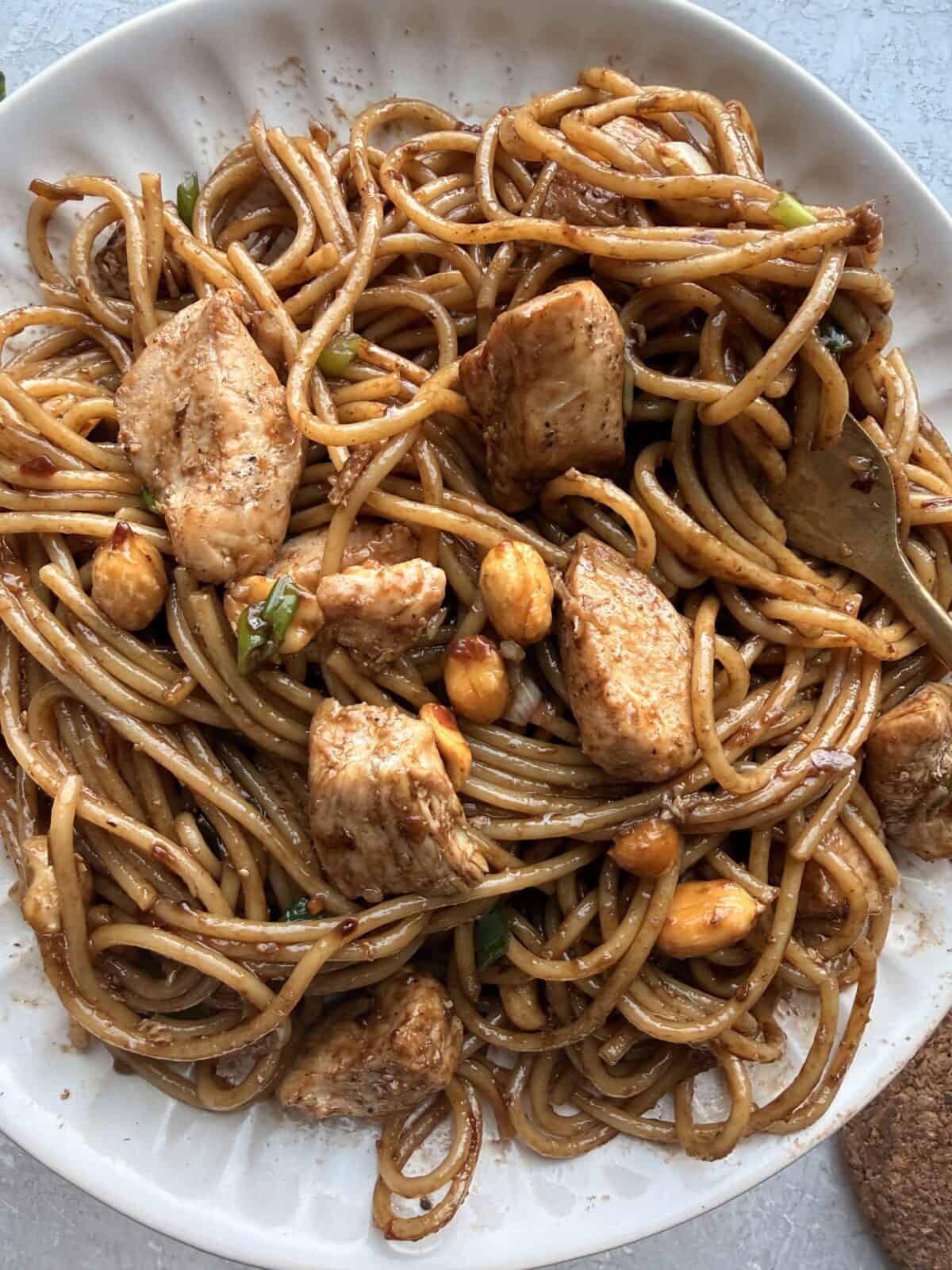
Kung Pao Spaghetti
Ingredients
For the Sauce
- 12 oz. spaghetti noodles
- ½ cup soy sauce
- ½ cup chicken broth
- 2½ tbsp brown sugar
- 2 tbsp rice vinegar
- 1 tbsp chili garlic sauce
- 1 tbsp cornstarch
- 1 tsp sesame oil
- dash of salt and pepper
For the Chicken
- 20 oz. boneless skinless chicken breasts chopped into bite size pieces
- ½ tsp salt
- ¼ tsp pepper
- 2 tbsp vegetable oil
- 2 cloves garlic minced
- ½ cup roasted peanuts plus more for topping
- 3 green onions chopped + more for topping
Instructions
- Bring a large pot of salted water to a boil. Refer to package directions, and cook the spaghetti a minute short of al dente. Drain the pasta and set aside.12 oz. spaghetti noodles
- In a bowl, whisk together the sauce ingredients.½ cup soy sauce, ½ cup chicken broth, 2½ tbsp brown sugar, 2 tbsp rice vinegar, 1 tbsp chili garlic sauce, 1 tbsp cornstarch, 1 tsp sesame oil, dash of salt and pepper
- Season the chicken with salt and pepper.20 oz. boneless skinless chicken breasts, ½ tsp salt, ¼ tsp pepper
- Add the oil to a large skillet or wok over medium-high heat. Stir fry the chicken until browned on all sides and cooked through. Add in the garlic and cook for a minute. Remove from the chicken from the pan and set aside on a clean plate.2 tbsp vegetable oil, 2 cloves garlic
- Add the sauce to the skillet over medium high heat. Once it starts to sizzle and thicken, add in the pasta, stirring to coat it in the sauce. Add in chicken, peanuts, and green onions and toss it all together until combined.½ cup roasted peanuts , 3 green onions
- Sprinkle with more peanuts and chopped green onion before serving.
Notes
- This recipe is mild as written. For real kung pao heat, use 2 tablespoons of chili garlic sauce instead of 1.
- Soy sauce and broth both add up in sodium, so swap in low-sodium versions if you’re watching salt.
- Chicken thighs make a juicier swap for breasts, just make sure chicken is fully thawed and patted dry before it hits the pan, or it’ll steam instead of brown and water down the sauce.
- Want veggies? Sauté sliced bell peppers in the skillet right after the chicken comes out in step 4.
- If the finished sauce feels too thick, a splash of extra chicken broth loosens it right up.
- Store leftovers in an airtight container in the fridge for up to 3 days, or freeze for up to 2 months (the sauce may separate slightly, so give it a good stir while reheating).
- Reheat in a skillet over medium heat with a splash of broth or water until warmed through.
Nutrition
How to Make Kung Pao Spaghetti Step by Step
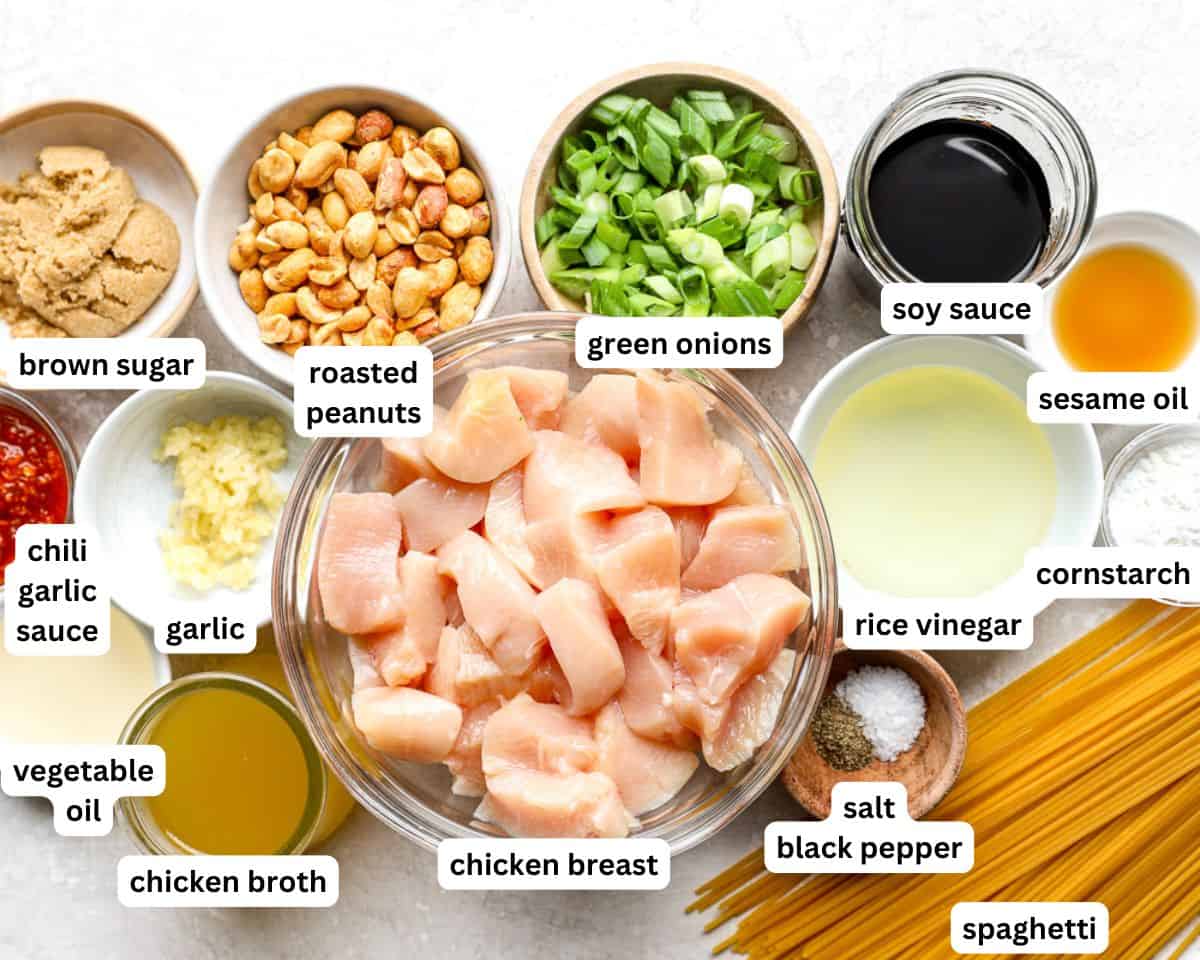
Gather all the ingredients together.
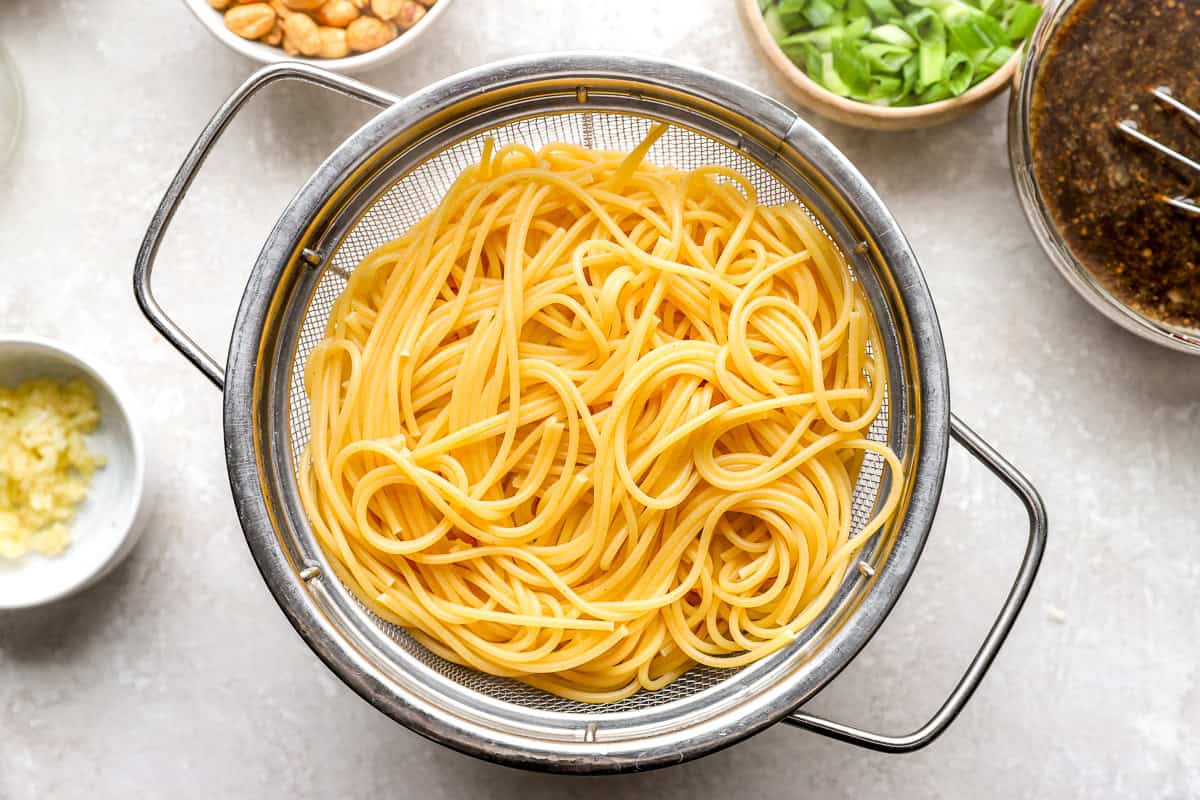
Cook the pasta: Bring a large pot of salted water to a boil and cook 12 oz. spaghetti according to package directions, but pull it about a minute before it hits al dente, so it still has a firm bite. Drain and set aside.
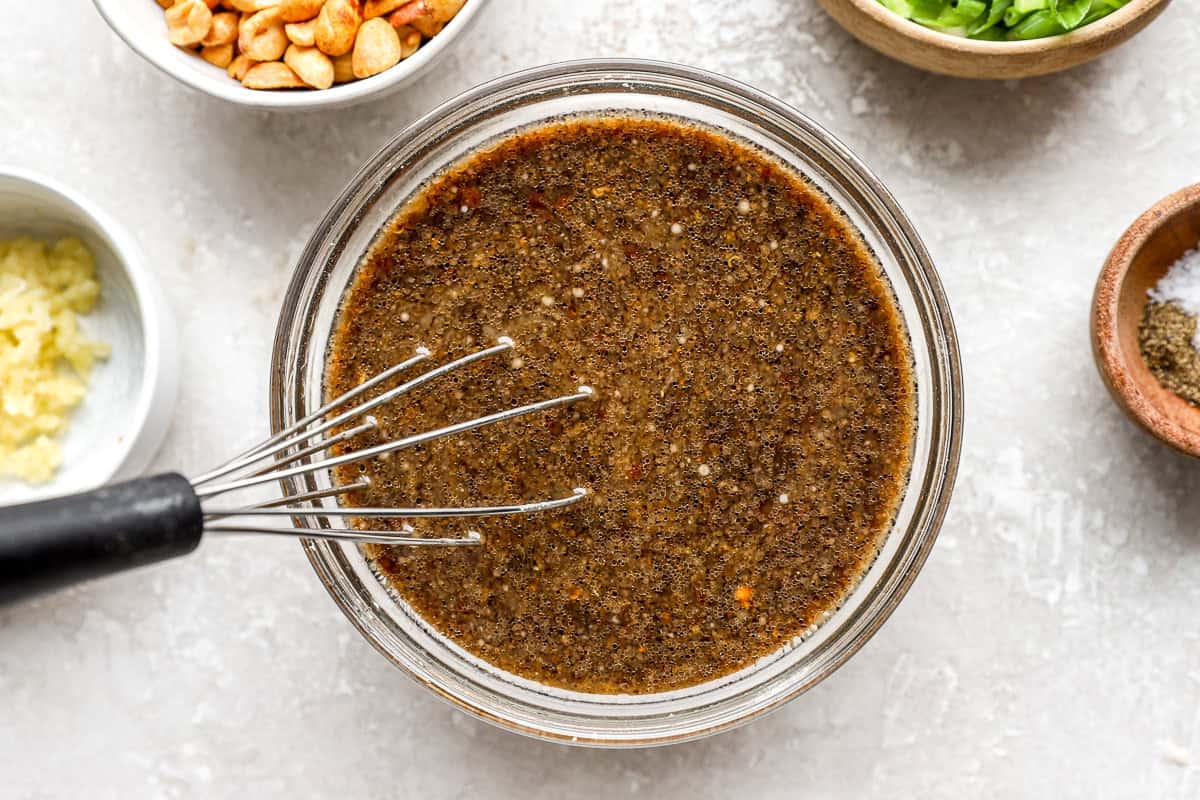
Whisk the sauce: In a bowl, whisk together ½ cup soy sauce, ½ cup chicken broth, 2½ tbsp brown sugar, 2 tbsp rice vinegar, 1 tbsp chili garlic sauce, 1 tbsp cornstarch, 1 tsp sesame oil, and a dash of salt and pepper. Whisk until the cornstarch is fully dissolved with no lumps, since that’s what gives you a smooth, glossy sauce later instead of a clumpy one.
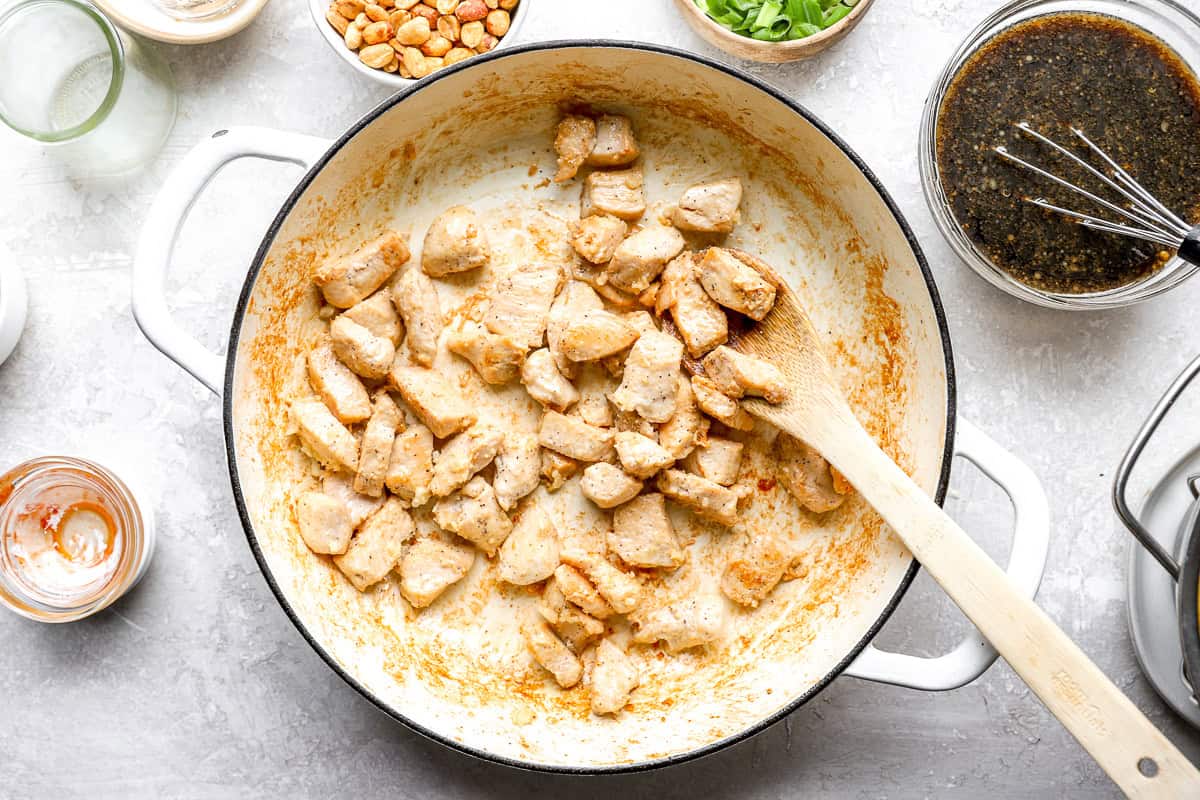
Season and sear the chicken: Season the 20 oz of chopped chicken breast with ½ tsp salt and ¼ tsp pepper. Heat 2 tbsp vegetable oil in a large skillet or wok over medium-high heat until it shimmers. Add the chicken in a single layer and stir-fry until browned on all sides and cooked through, about 6-8 minutes. Add the 2 cloves of minced garlic and cook for one more minute, just until fragrant (watch closely, since burnt garlic turns bitter fast). Remove the chicken to a clean plate.
Thicken the sauce: Pour the sauce into the same skillet over medium-high heat. Let it come to a sizzle and start to visibly thicken and turn glossy, about 1-2 minutes. This is the cornstarch doing its job.
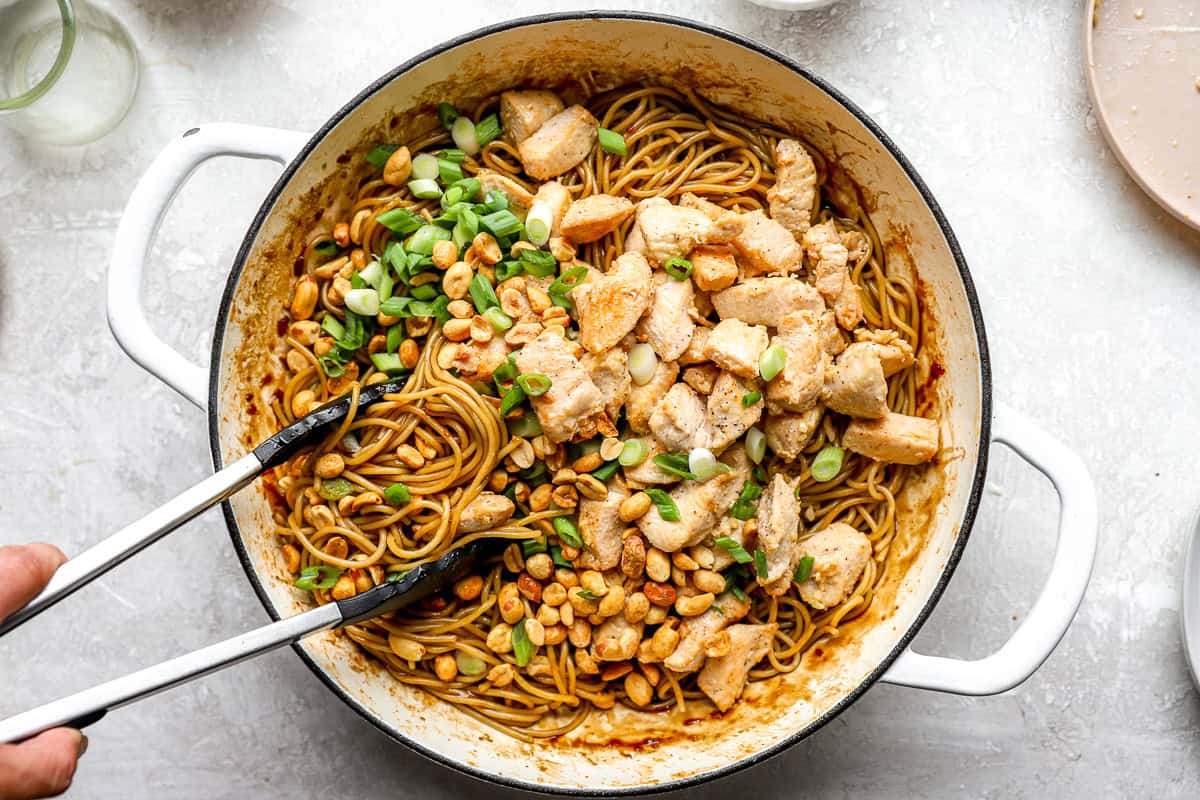
Bring it together: Add the drained pasta to the skillet and toss to coat every strand in the sauce. Add the cooked chicken, ½ cup roasted peanuts, and 3 chopped green onions, and toss again until everything is evenly combined and heated through.
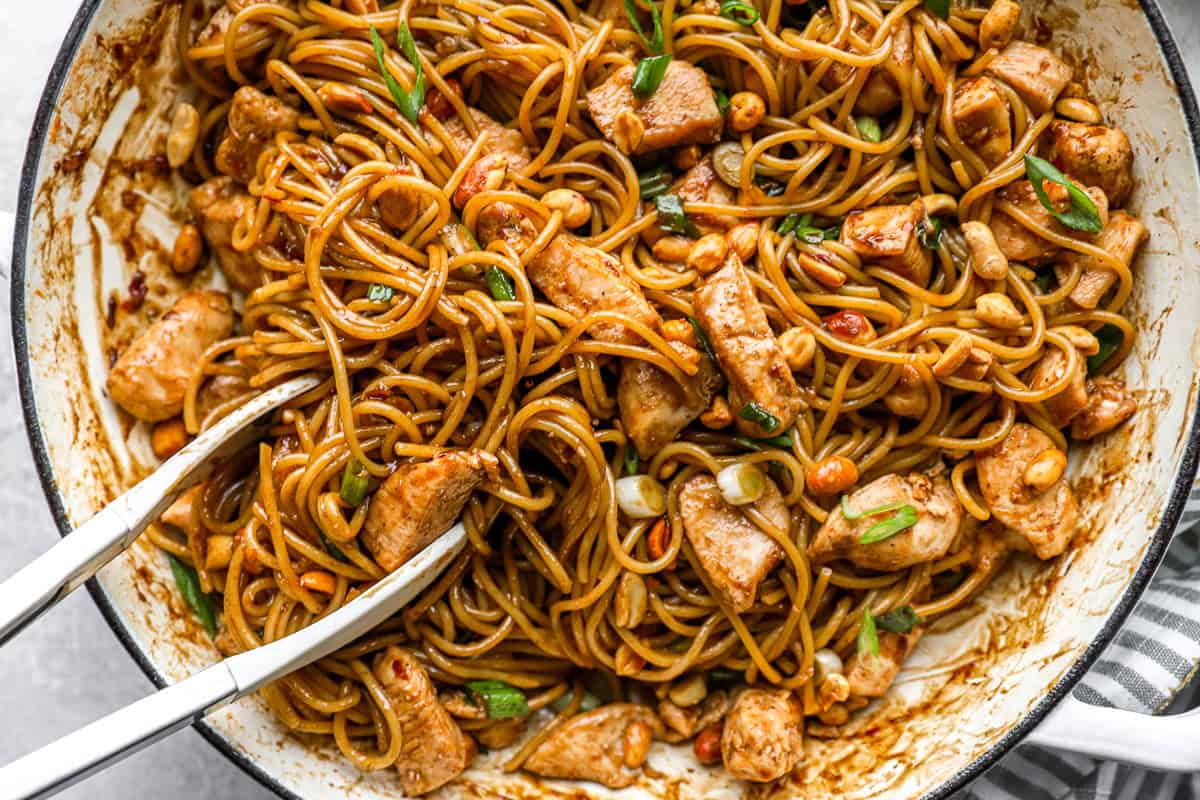
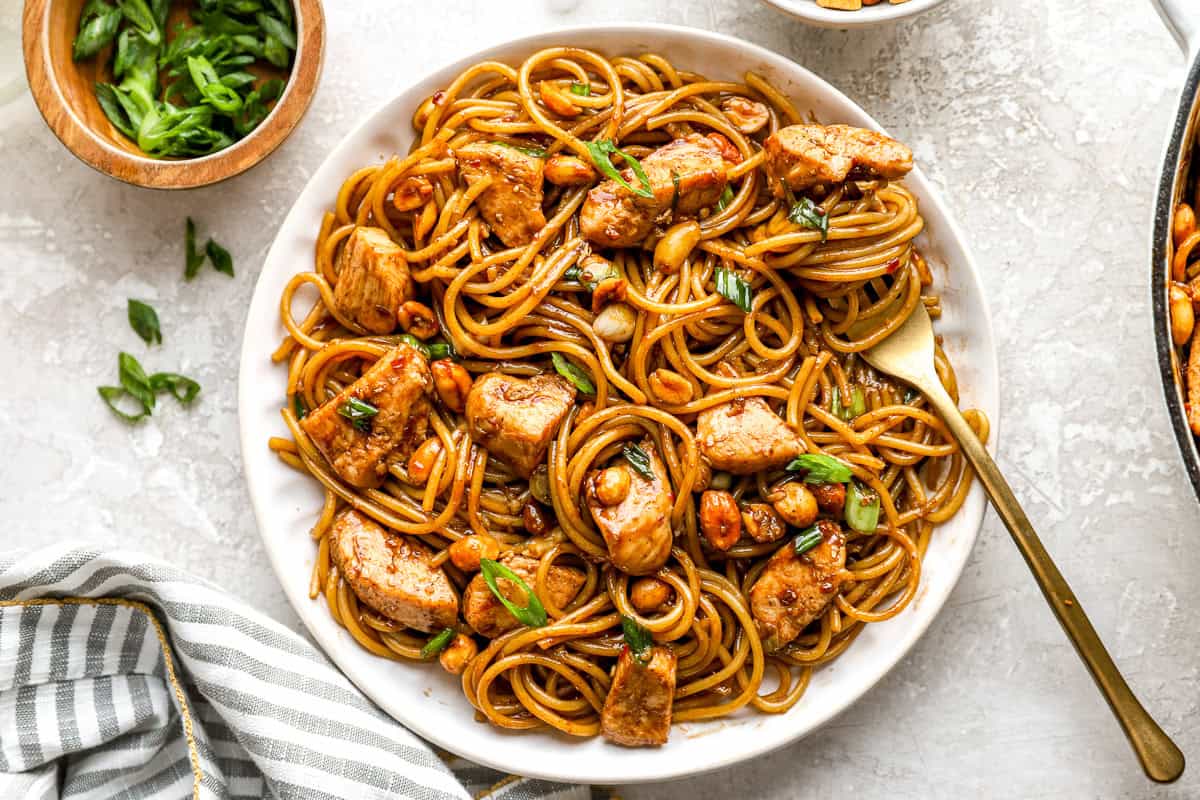
Serve: Sprinkle with extra peanuts and chopped green onion right before serving.
How to Store and Reheat
Store leftovers in an airtight container in the fridge for up to 3 days. The pasta will continue to soak up sauce as it sits, so it may taste slightly less saucy by day three.
Freezer
This dish is best enjoyed fresh, but you can freeze it in an airtight, freezer-safe container for up to 2 months. Note that the pasta’s texture will soften after thawing, and the sauce may separate slightly — a good stir while reheating brings it back together.
Reheating
Reheat in a skillet over medium heat with a splash of chicken broth or water to loosen the sauce, stirring occasionally, until warmed through. You can also microwave in 30-second bursts, stirring between each, though the stovetop keeps the noodles from turning rubbery.
Make Ahead
The sauce can be whisked together and stored in the fridge for up to 2 days ahead of time — just give it another whisk before using, since the cornstarch can settle. This is a great way to cut your active cooking time down on a busy night.
Serving Suggestions
The classic way to serve kung pao spaghetti is simple. Eat it straight out of the skillet into bowls, piled high with extra peanuts and green onions. It doesn’t need much else, but if you want to round out the meal, here’s what I always reach for at my own table.
For something light on the side, cucumber onion salad is my go-to. The cool, crisp crunch and tangy bite are the perfect contrast to the warm, saucy noodles, and it takes about 10 minutes to throw together. If I’m feeding a crowd or want to stretch the meal a little further, I’ll set out a bowl of edamame with everything bagel seasoning as a hands-on starter. It fits the whole takeout-night vibe and gives everyone something to snack on while the noodles finish. And for dessert, I love ending the meal with something cool and fruity like grilled peaches and ice cream. It’s light enough to feel refreshing after all that bold, spicy sauce, but still feels like a treat.
More Sweet and Spicy Takeout Copycats to Try
- Sesame Chicken: Crispy chicken tossed in a sticky, sweet-spicy sauce that’s basically kung pao’s sister dish. If you’re after that same sweet-heat balance in a different form, start here.
- PF Chang’s Lettuce Wraps: Another restaurant copycat that’s faster (and better) than delivery. It’s a great lighter starter or appetizer if you’re building out a full takeout-at-home spread around your kung pao spaghetti.
- Better-Than-Takeout Chicken Stir Fry: Same quick skillet method, same sauce-first mentality, just swap noodles for rice. If you’re stocking your weeknight rotation with more recipes like this one, this is the next one to try.
- Bang Bang Shrimp: My lightened-up take on the Bonefish Grill classic. It’s proof that sweet-spicy sauce and a quick stir-fry technique work with basically any protein, shrimp included.
more favorite noodle dishes
The post Kung Pao Spaghetti appeared first on The Cookie Rookie®.


0 Commentaires